25 Oct 2026
Material Selections and Their Role in Shaping Aging Outcomes for Compact Barrels

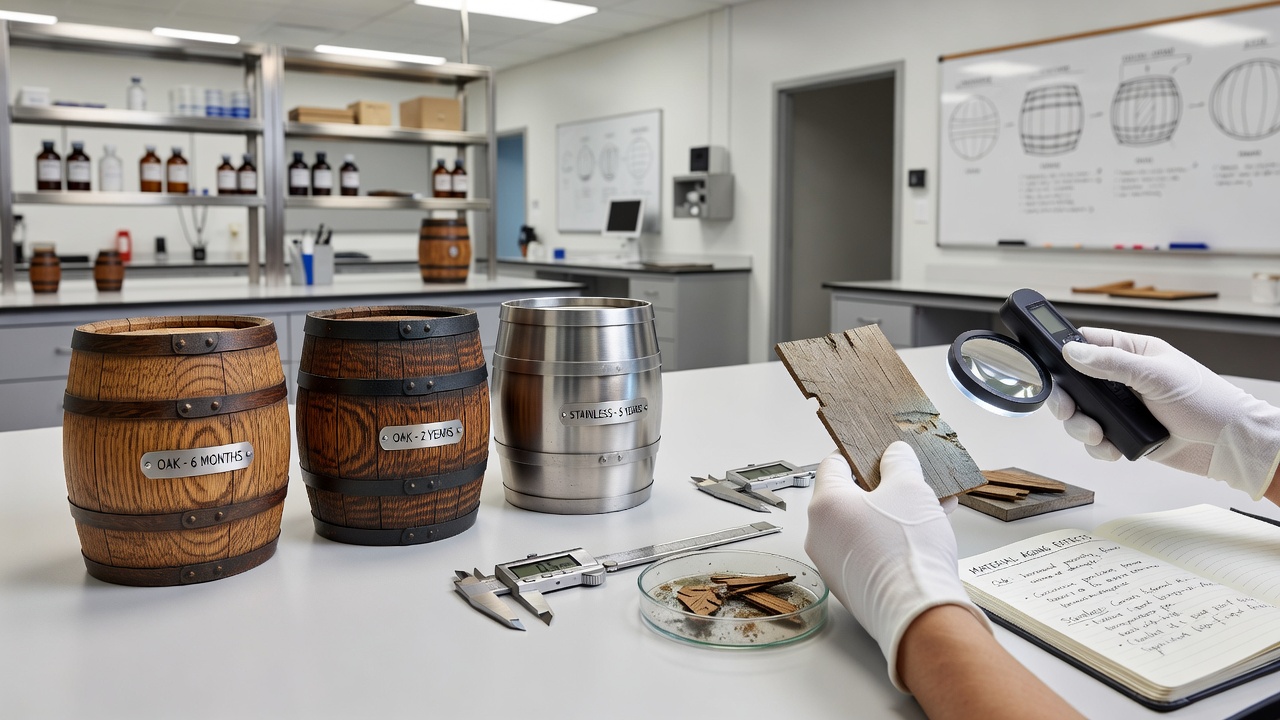
Compact barrels present unique challenges for liquid maturation because their reduced surface area to volume ratios alter extraction rates compared to traditional larger formats, and material choices directly control how oxygen interacts with the contents over time. Researchers track these dynamics through controlled tests that measure tannin release, volatile compound development, and color changes across multiple wood species and metal alloys. Data from such trials show that American white oak releases higher vanillin levels within the first six months than European oak, while stainless steel variants limit any flavor transfer and maintain original spirit profiles with minimal alteration.
Common Construction Materials and Their Properties
Wood remains the dominant choice for compact barrels because its cellular structure allows controlled oxygen ingress that supports esterification reactions essential to flavor development, yet different species exhibit distinct permeability rates that affect aging speed. French oak, for instance, possesses tighter grain patterns that slow oxygen transmission, which extends maturation timelines and preserves more delicate fruit notes in spirits. American oak, by contrast, features wider pores that accelerate interaction, leading to quicker integration of caramel and spice compounds according to measurements recorded in multiple industry trials. Metal options such as stainless steel or aluminum provide zero permeability, which suits producers aiming to halt further evolution after an initial wood contact phase, and these materials resist corrosion when properly treated with food-grade coatings.
Oxygen Permeability and Chemical Interactions
Oxygen diffusion through barrel walls drives many aging reactions, and material thickness combined with porosity determines the rate at which dissolved oxygen reaches the liquid. Studies indicate that oak staves between 18 and 22 millimeters thick in compact formats deliver oxygen at levels sufficient for gradual oxidation without excessive evaporation losses, whereas thinner walls in metal barrels eliminate this pathway entirely. Wood also contributes ellagitannins and lignin derivatives that bind with alcohol molecules, forming new esters that enhance complexity, yet these contributions vary by toast level applied during manufacturing. Light toasts preserve more raw wood character while heavy toasts generate additional furan compounds that add roasted notes, and researchers quantify these differences through gas chromatography analysis of aged samples.
Case Examples from Production Environments
One distillery in Kentucky documented results from parallel batches aged in American oak versus stainless steel compact barrels for twelve months, revealing that the wood version gained 35 percent more lactone content while the metal version retained higher original congener levels from the distillate. Similar tests conducted at facilities in Scotland demonstrated that European oak compact barrels imparted lower color intensity yet higher tannin structure, which influenced mouthfeel measurements taken at regular intervals. In Australia, producers working with Shiraz spirits noted that acacia wood options accelerated certain floral ester formation compared to oak, although evaporation rates increased slightly due to the wood's different density profile. These observations align with data released by the US Forest Products Laboratory on how grain orientation affects liquid penetration in small containers.
Regional Variations and Measurement Standards
European regulations require traceability for wood sources used in food-contact barrels, which influences material selection for compact formats exported to EU markets, while Canadian standards emphasize coating integrity for any metal components to prevent leaching. Australian researchers at the Australian Wine Research Institute published findings in early 2026 on how barrel material affects sulfur compound management during aging, showing reduced hydrogen sulfide development in oak compared to inert surfaces. Upcoming presentations scheduled for October 2026 at an international wood science conference will expand on these regional datasets with new permeability models tailored to barrels under 20 liters in capacity.
Long-Term Stability Considerations
Over extended periods, material fatigue becomes relevant because repeated expansion and contraction cycles in wood can create micro-fractures that alter oxygen pathways, whereas properly maintained stainless steel maintains consistent performance across multiple uses. Cleaning protocols differ by material, with wood requiring careful rinsing to avoid residue buildup that might harbor microbes, and metal surfaces tolerating more aggressive sanitation methods without degradation. Storage conditions such as humidity and temperature further modulate these material behaviors, with higher ambient moisture slowing evaporation through wood pores and having negligible effect on sealed metal designs.
Conclusion
Material decisions in compact barrel construction establish the parameters for oxygen exposure, flavor compound extraction, and overall maturation trajectory, with empirical data confirming measurable differences across oak varieties, toast levels, and inert metal alternatives. Producers reference these documented interactions when selecting formats that align with target flavor outcomes and regulatory requirements in their operating regions. Ongoing research continues to refine models that predict aging results based on specific material combinations and environmental factors.